



Busbar Machine Applications in Switchgear, Control Panels, and Transformer Workshops
Start with the workflow, not the machine brochure
In switchgear lines, control panel fabrication, and transformer workshops, a Busbar Machine usually becomes a bottleneck long before anyone admits it. Holes are accurate on one shift and off on the next. Bends need manual correction. Material handling eats more time than punching or cutting. If you are managing delivery dates, that is the real issue to solve: not buying a machine with the longest feature list, but choosing equipment that matches your busbar flow, tolerances, and operator reality.
A practical review starts with what your team processes every week. Copper and aluminum busbars behave differently in forming and surface finish. Small control panel jobs often change dimensions constantly, while transformer work may involve thicker bars and repeat batches. Those are not minor details. They decide whether you need speed, setup flexibility, angle memory, cleaner shearing, or better positioning support.
What to check before you assign a busbar application to one machine
- Map the actual bar sizes. Do not start with “general capacity.” Pull the production drawings and list the narrowest, widest, thinnest, and thickest bars used across the three workshop types. A machine that covers up to 160mm width and 15mm thickness may be sufficient for many switchgear and transformer applications, but the decision only holds if your frequent jobs stay inside that envelope. One oversized bar in a critical project can push work back to manual rework or subcontracting.
- Separate repeat work from engineering-change work. Repeat jobs reward data memory and fast positioning. One-off jobs reward easy setup and clear referencing. If your workshop constantly switches hole layouts and bend angles, direct angle input and stored programs reduce operator dependence more than raw hydraulic force does.
- Look at sequencing time, not single-operation speed. Project leaders often focus on punching speed alone. That misses the real waste: waiting between shearing, punching, and bending. Machines with independent working stations can keep operations moving in parallel, which matters more when schedules are tight and one part must pass several steps before assembly.
- Check how positioning is achieved. Laser positioning, ruler-based positioning, and physical locating pins each help in different ways. On panel work with varied lengths and frequent changes, better positioning reduces cumulative error. On transformer busbars, where bends and hole locations must line up cleanly during final assembly, positioning consistency matters more than headline speed.
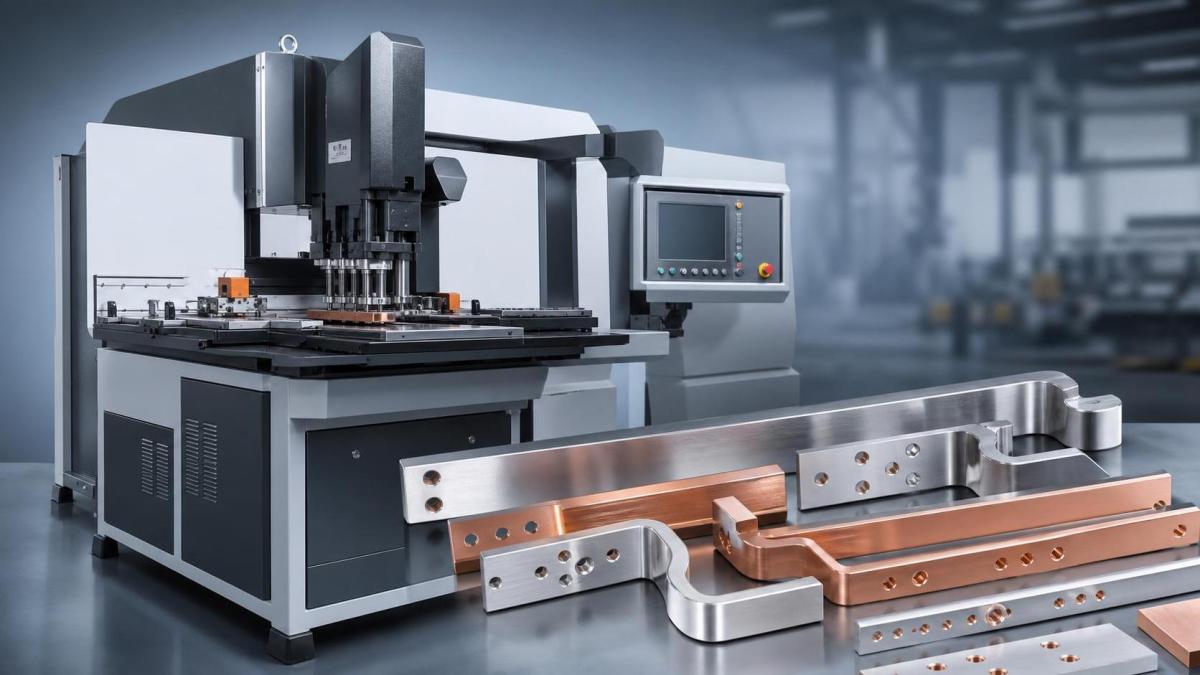
A common mistake here is treating all busbar fabrication as if it were the same job with different dimensions. It is not. In a control panel shop, the pressure is often on responsiveness and reduced setup loss. In a switchgear workshop, repeatability and clean hole alignment usually dominate. In transformer production, heavier sections and bend consistency can decide whether final fitting stays on schedule.
Application checks by workshop type
Switchgear production
For switchgear, check three things first: hole repeatability, edge quality after shearing, and bend accuracy. Misaligned holes slow assembly immediately. Rough cuts create extra finishing work. Angle deviation shows up later, when bars no longer sit correctly against insulators or connection points. A machine with stable punching, burr-free shearing, and bending accuracy around ±0.5° is easier to justify here because those details affect assembly fit-up directly, not just workshop appearance.
Control panel assembly
Panel work usually exposes setup weakness fast. If your team handles many small and mixed orders, check the minimum workable bar size as carefully as the maximum one. Fine work on smaller sections can become awkward on equipment designed mainly for heavy-duty bars. Also review available hole sizes and oblong-hole options, because panel layouts often need flexibility rather than one standard punch pattern.
Transformer workshops
Transformer jobs tend to punish weak frames and inconsistent tooling. When you are working with thicker copper or aluminum bars, verify not only nominal force ratings but the machine structure, die material, and long-term stability of the shearing and bending units. If the shearing section loosens over time or the dies wear quickly, accuracy loss appears gradually and becomes expensive before anyone traces the cause back to tooling.
A short decision table for project planning
One example that fits this middle ground is the DXJ-30CN CNC Busbar Bending Machine. For workshops processing copper and aluminum busbars, its working range up to 160mm width and 15mm thickness, punching range from Φ3.2 to Φ35, and three independent hydraulic stations line up with the kind of mixed application load many electrical manufacturers deal with. The useful part for project managers is not the model name itself; it is the combination of simultaneous working stations, stored angle data, and positioning support, because those features reduce hand-correction time when schedules are tight.
Risk points that usually get missed in procurement
- Ignoring die life. Punch quality can look fine during acceptance and degrade months later. If the dies are expected to handle high cycle counts, ask for the actual die material and fatigue performance, not just a statement that the unit is “durable.”
- Underestimating language and control usability. In multi-shift shops or overseas facilities, multilingual control support is not cosmetic. It affects training speed and operator error rates.
- Focusing only on tonnage. A higher force number does not automatically mean better output. Clean shearing without burrs, corner collapse, or scrap often saves more labor than extra force you never use.
- Skipping workshop layout review. Machine dimensions, power supply, and material feeding space should be checked before release. A capable machine still loses time if bars cannot be loaded, turned, and discharged efficiently around it.
What a solid evaluation looks like
If you are comparing Busbar Machine options for switchgear, control panels, or transformer work, review them in this order: your real bar size range, your dominant job mix, the number of operations each part goes through, the required bend and hole consistency, then the durability of dies, hydraulic stations, and motor system. Certifications and supplier support matter too, especially when uptime and after-sales response affect project delivery, but they should support the application decision rather than replace it.
The practical goal is simple: choose a machine that keeps busbar processing predictable from drawing release to final assembly. When that happens, your workshop spends less time correcting parts, less time waiting between stations, and a lot less time explaining delays that started on the fabrication floor.
Send Us A Message
Get in Touch
*We respect your confidentiality and all information are protected.

First class quality service and professional after-sales team.