


Is an Automatic Busbar Machine Worth the Investment for Growing Electrical Factories?
Start with the production bottleneck, not the machine brochure
The real question is not whether an automatic Busbar Machine is advanced enough. It is whether your factory has reached the point where manual or semi-automatic processing is already costing more than the machine. In growing electrical factories, that point usually shows up in familiar ways: operators spend too much time changing setups, quality varies from shift to shift, urgent orders interrupt the line, and rework starts eating into delivery time.
If your team is regularly handling copper or aluminum busbar bending, punching, cutting, and embossing across multiple batches, automation stops being a nice upgrade and starts looking like a capacity decision. The investment makes sense when it removes repeatable labor, reduces avoidable scrap, and helps you keep output stable as order volume grows.
Before you ask for quotations, run through this checklist the same way an experienced production manager would.
Check whether labor savings are real in your workflow
A lot of buyers look at machine speed first. That is useful, but it is rarely the full story. What matters more is how many manual touches happen before and after each operation.
- How many operators are involved from raw busbar loading to finished part handling?
- How often do operators re-measure, re-align, or correct parts by hand?
- How much time is lost between punching, cutting, and bending because work moves between stations?
If you still need heavy manual intervention after every step, a faster machine alone will not fix your cost structure. On the other hand, if your jobs are repetitive and your current process depends on operator skill to stay accurate, automation usually pays back through consistency as much as through headcount reduction.
Look at part mix before you look at headline capacity
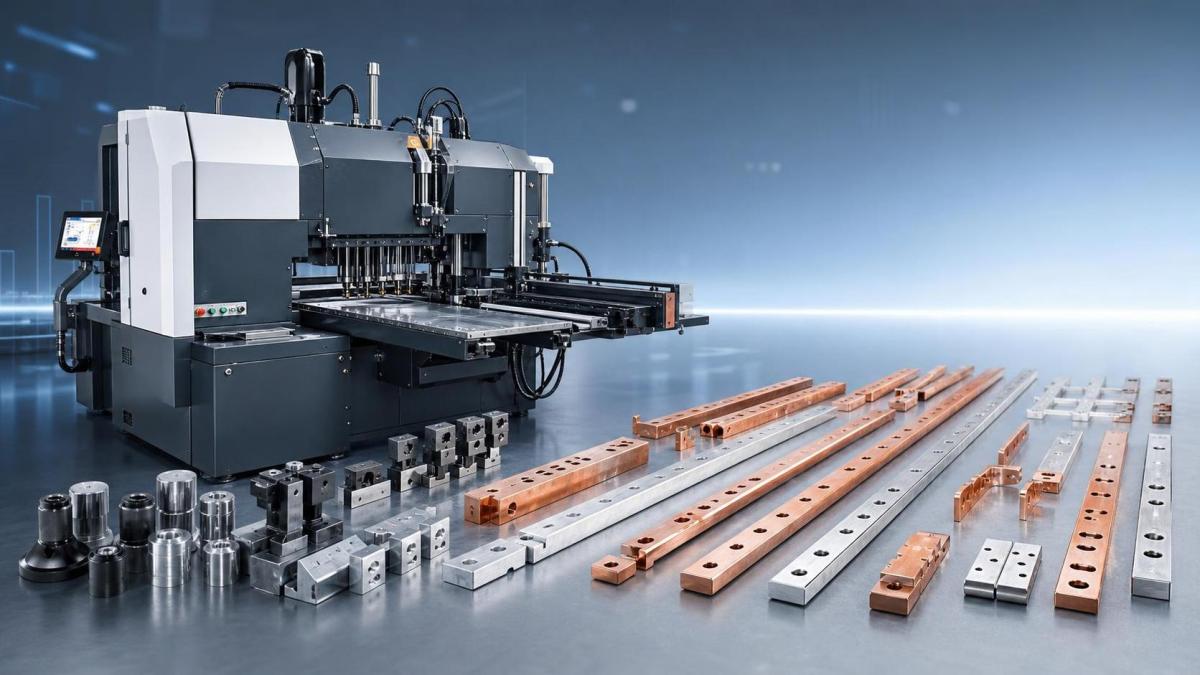
A growing factory often processes a mix of standard runs and short custom jobs. That matters. If your order book is mostly long, repeatable batches, an automatic Busbar Machine can run efficiently with fewer interruptions. If your shop changes dimensions, hole positions, and bend requirements all day, the value depends on programming speed, setup simplicity, and tool change time.
This is where buyers sometimes get trapped by nominal throughput. A machine may look productive on paper, but if every new order slows the line down, the business case weakens. Ask your team to review one month of actual jobs and group them by repeatability, material type, thickness range, and tolerance sensitivity. That review tells you much more than a catalog number ever will.
Measure the cost of inconsistency
Factories usually notice labor cost first, but quality variation can be the bigger drain. Busbar parts that need re-punching, re-bending, or scrapping do not just waste material. They interrupt assembly schedules and create hidden delays downstream.
Check these points from the last few months:
- How often were parts rejected because hole positions drifted?
- How often did bend angles need manual correction?
- Which defects were tied to operator experience rather than raw material issues?
If defects cluster around repeated manual steps, automation is solving a process problem, not just adding equipment. That is a much stronger reason to invest.
Do not ignore tooling and wear parts in the purchase decision
The machine price is only one part of ownership cost. Tooling replacement, die wear, and maintenance intervals affect your real operating expense. For cutting operations, even a relatively low-cost component matters if it is replaced often or if poor-quality tooling causes burrs, waste, or unplanned stops.
For example, a Cutting Die priced at $80 may seem minor in the initial budget, but it becomes significant when you calculate replacement frequency across production volume. Buyers who only compare machine quotes often miss this. Ask for the wear-part list, expected maintenance items, and the replacement cycle under your material and workload conditions.
Check whether the machine matches your materials and process range
This sounds obvious, but it gets overlooked when purchasing is rushed. A machine that performs well on one material or thickness range may not fit your full production mix. If you process both copper and aluminum busbars, review how often specifications change and whether your current jobs require different forming or punching conditions.
What you need to verify is practical:
- Supported operations: bending, punching, cutting, embossing.
- Fit with your routine busbar dimensions and daily job mix.
- How tooling changes affect downtime when switching products.
A machine that covers only part of the workflow can still be worth buying, but only if you are clear about which bottleneck it removes and which manual steps remain.
Evaluate downtime risk before you evaluate speed
Decision-makers often focus on cycle time because it is easy to compare. In production, downtime hurts more. A slightly slower machine that runs steadily with less noise, durable components, and predictable maintenance can be the better investment than a faster unit that disrupts output.
This is where build quality and manufacturing discipline matter. Suppliers that emphasize precision molds, stable motors, strict quality control, and long service life are addressing the right problem: keeping the line available. Certifications such as ISO, CE, 3A, and EAC also belong in your review, not as marketing decorations, but as part of supplier documentation and market-fit checks. For export-oriented factories, verify which certificate applies to the machine model you are buying and which destination market actually requires it.
Ask how support works after installation
An automatic line is only productive when your operators can use it properly and your maintenance team can keep it running. That makes technical support and after-sales service part of the investment case, not an optional extra.
Good questions here are concrete. Who handles commissioning? What training is provided for operators? How are spare parts supplied? If a fault stops production, what is the support path and response method? A growing factory does not have much room for avoidable learning-curve losses.
Use a simple buying table before making the call
Make the decision in the right order
If you are buying for a growing electrical factory, the safest approach is simple. Start with your production records, identify where manual processing is limiting output or causing errors, then compare that against the full ownership cost of the machine, including tooling, support, and downtime risk.
An automatic Busbar Machine is worth the investment when it solves a proven bottleneck, fits the mix of jobs you actually run, and gives you predictable operating cost instead of just higher theoretical speed. If those three conditions are in place, the purchase is usually easier to defend internally and easier to recover through day-to-day production gains.
Send Us A Message
Get in Touch
*We respect your confidentiality and all information are protected.
First class quality service and professional after-sales team.