



Local Service or Export Supplier: Choosing a CNC Busbar Bender Partner
A procurement team may be ready to replace manual busbar forming with automated bending, yet the supplier decision can stall on one question: buy from a nearby service company or work directly with an export supplier. The wrong choice can show up long after installation—when a bending program needs adjustment, a mold is wearing unevenly, or a replacement part is needed during a production deadline.
The practical answer is not that local service is always safer or that direct export is always cheaper. Choose the partner whose technical capability, service model, and commercial terms match the risk your operation can realistically manage. An automatic cnc busbar bender manufacturer is usually the stronger long-term option when your requirements involve customized tooling, special busbar dimensions, control parameters, or direct access to the people who build the machine. A local provider may be the better fit when rapid on-site intervention and low internal maintenance capacity matter more than customization or factory-direct coordination.
Start with the operating problem, not the supplier location
Before comparing quotations, define what the bending cell must accomplish on the shop floor. A busbar bender selected only by nominal bending force or purchase price may still create delays if it cannot accommodate the required material thickness, bend geometry, production rhythm, or accuracy expectation.
Procurement and engineering should agree on a short operating brief that includes copper and aluminum grades, busbar width and thickness ranges, minimum bend dimensions, expected production volume, and whether parts change frequently. Include the drawings that cause the most difficulty: tight bends, repeated offset bends, parts with punched holes close to the bend line, or components requiring consistent orientation for later assembly.
- Is production based on repeat batches or frequent small-order changes?
- Will operators need to create programs at the machine, import prepared data, or do both?
- Are standard molds adequate, or do drawings require custom dies and fixtures?
- How much downtime can the plant tolerate before delivery schedules are affected?
- Can in-house technicians handle mechanical and electrical first-line troubleshooting?
These answers change the value of local presence. A nearby supplier can be useful, but only if it can actually diagnose CNC, servo, tooling, hydraulic, or electrical issues rather than merely forward the request to another party.
When local service provides a real advantage
Local sourcing is most valuable when installation conditions are uncertain or internal technical resources are limited. Site access, electrical connection, foundation preparation, operator training, and initial trial production can move faster when a qualified technician can visit without cross-border scheduling. This can reduce the uncertainty surrounding the first weeks of operation, especially where a machine must be integrated into an existing punching, cutting, marking, or material-handling process.
Local partners also simplify communication when a production supervisor needs fast clarification. The benefit is not merely language; it is the ability to see the actual material, tooling condition, part drawings, and workflow constraints. For plants that run high-priority work with little spare capacity, this responsiveness may justify a higher acquisition cost.
However, local availability should be verified rather than assumed. Ask whether the provider stocks critical consumables and replacement parts, who performs commissioning, how technical escalations are handled, and whether service personnel are trained on the specific controller and bending configuration being offered. A distributor with limited product knowledge can add an extra communication layer without shortening resolution time.
Where a direct export supplier can be the better partner
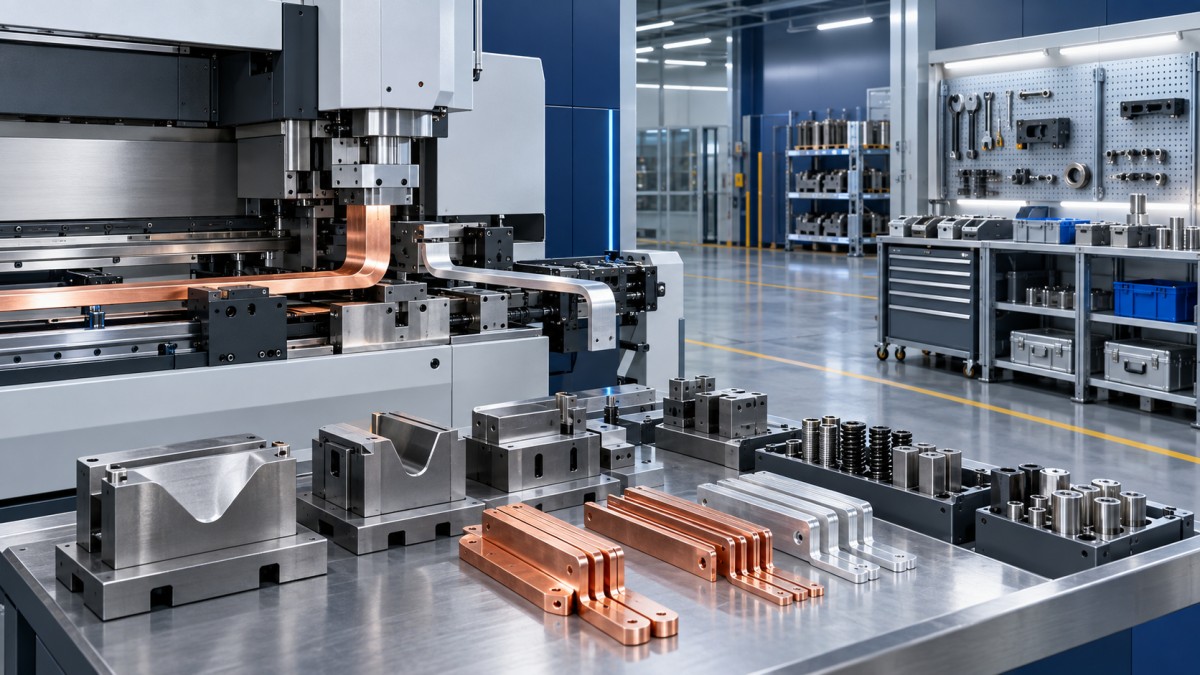
Working with the manufacturer often gives the buyer closer access to design, tooling, assembly, and application engineering. That matters when the requested machine differs from a catalog configuration. A direct supplier can usually confirm whether a material range is genuinely supported, whether a die design is appropriate for the bend profile, and which machine arrangement is needed before production begins.
This route is particularly suitable when the buyer has capable maintenance personnel, can manage remote commissioning support, and is prepared to specify requirements carefully. It can also be appropriate for multi-site companies that want consistent equipment specifications, shared spare-parts planning, and direct technical records across facilities.
The risks are manageable, but they must be addressed in the purchase process. Distance can complicate on-site support, logistics for major components, and communication across time zones. A supplier should therefore provide a clear pre-shipment inspection process, machine documentation in the required language, electrical diagrams, recommended spare parts, remote diagnostic arrangements, and a defined method for resolving faults that cannot be handled remotely.
Compare the two options against the same evidence
Do not accept broad statements such as “global support” or “local service available” without asking how the process works. A useful supplier response identifies the service channel, expected information required for diagnosis, available communication methods, and the division of responsibility between the seller, manufacturer, installer, and buyer.
Test technical depth before you compare price
A serious partner should be able to ask detailed questions in return. They should want to know the conductor material, cross-section, bending directions, part tolerances, sequence of punching and bending, required output, and operator experience. Suppliers that quote immediately without checking these points may be pricing a generic machine rather than confirming a workable production method.
Request a review of representative drawings and clarify the acceptance basis before placing the order. The agreement should state the material used for testing, the applicable tooling, machine functions to be demonstrated, safety provisions, included accessories, documentation, and training scope. Where possible, review videos or records of the machine running comparable work, but treat these as supporting evidence rather than a substitute for agreed specifications.
It is also sensible to inspect the supplier’s product boundaries. A manufacturer may offer equipment for adjacent electrical-production tasks, such as the DXJ-RX2T Horizontal Coil Winding Machine (2 Ton), which is intended for winding transformer and reactor coils rather than bending busbars. Its 2-ton load capacity, variable speed range, turn counting, and braking functions may be relevant to a broader transformer manufacturing line, but they should not be used as proof that a CNC busbar bender meets your bending requirements. Evaluate each machine by its own application, tooling, controls, and acceptance criteria.
Make after-sales support measurable
After-sales capability is often described in general terms during the sales process, while the real need is more specific. Ask what information must be provided when a fault occurs: alarm codes, photos of the tooling position, electrical readings, controller backups, or a short operating video. This tells you whether remote support is organized enough to be useful.
For export purchases, order a sensible commissioning spare-parts package based on the machine configuration. The list should distinguish wear items, electrical components, seals, sensors, and items whose replacement requires trained personnel. Keeping every possible part in stock is unnecessary; waiting for a small but essential component during a production interruption is also avoidable.
Training should cover more than normal operation. Operators need to understand safe material positioning, program selection, mold installation checks, and how to recognize abnormal noise, inaccurate angles, or inconsistent part positioning. Maintenance staff need access to lubrication requirements, adjustment instructions, alarm references, and electrical documentation. A local partner can deliver this on site; an export supplier can still support it effectively when documentation and remote instruction are prepared before shipment.
A practical selection rule
Select local service when on-site response is critical, internal maintenance support is limited, and the provider can demonstrate genuine competence with the proposed machine. Select a direct export manufacturer when customization, factory-level technical access, consistent specifications, and transparent machine configuration are more important—and when your team can manage installation and first-line support with structured remote assistance.
In either case, the strongest partner is the one that turns your drawings and operating conditions into a documented machine scope, explains limitations before the order is placed, and remains accountable for the support path after delivery. Location matters, but clarity of technical responsibility matters more.
Send Us A Message
Get in Touch
*We respect your confidentiality and all information are protected.

First class quality service and professional after-sales team.